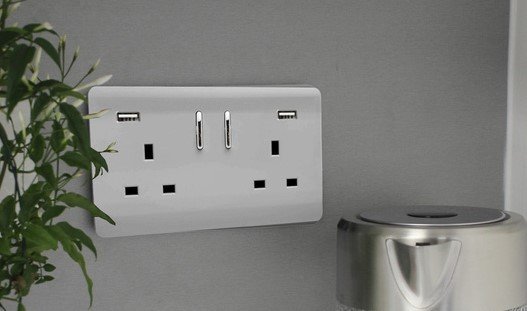
Yes — you can charge an electric car from a standard 3-pin household socket. Most EVs come with a cable that does exactly this. But should you? That's a different question entirely. Here's everything you need to know.
What is a granny cable?
The cable that plugs into a standard 13A household socket is commonly called a granny cable or EVSE cable. It typically comes in the box with a new EV or can be bought separately for around £100–£300. It works — your car will charge. But the rate is very slow, and there are safety considerations worth understanding before you rely on it.
How slow is 3-pin plug charging?
A standard UK wall socket delivers around 2.3kW of power. Here's what that means in practice:
In practice, most people don't charge from empty. But even topping up 50% of a typical EV battery takes 10–12 hours from a 3-pin socket. For a daily driver, that's cutting it fine if you arrive home late and need to leave early.
A 3-pin plug adds 8 miles of range per hour.
A home charger adds 30 miles per hour.
Is it safe to charge from a 3-pin socket?
Occasionally — yes. Regularly — it's not ideal, and here's why.
A standard 13A socket is designed for short, intermittent loads — kettles, phone chargers, lamps. Charging an EV draws a sustained load of around 10 amps for 8–17 hours at a time. That's a very different demand on your wiring.
⚠️ Never charge an EV via an extension lead. The current draw over many hours generates significant heat in the connections — this is a genuine fire risk and not worth the risk under any circumstances.
Older sockets, worn connections, or sockets already under load are at risk of overheating. A dedicated home EV charger has built-in safety systems — earthing protection, current monitoring, automatic shutoff — that a standard socket simply doesn't have.
When is a 3-pin plug acceptable?
| Situation | 3-pin plug OK? |
|---|---|
| Occasional top-up at family's house | ✓ Fine |
| Low mileage driver, under 20 miles/day | ✓ Manageable |
| Temporary use waiting for charger install | ✓ Short term |
| Primary daily charging method | ✗ Not recommended |
| Charging via extension lead | ✗ Never do this |
| Older property with worn sockets | ✗ Avoid |
What does a dedicated home charger do differently?
A 7.4kW home charger delivers more than three times the power of a 3-pin socket, but the differences go beyond speed:
- Built-in earthing protection — required by UK regulations, not present in a standard socket
- Automatic current monitoring — shuts off if something isn't right
- Smart scheduling — charges overnight at the cheapest electricity rate automatically
- Weather-resistant — designed for outdoor use, safe in all UK conditions
- No extension leads, no adapters — a clean, direct connection every time
How much does a home charger cost to install?
At EV Monkey, home charger installations start from £899 including supply and installation — charger, cable, certification and a 2-year workmanship guarantee all included. For most homes in West Sussex, East Sussex and Surrey, that's the complete price with nothing added on the day.
On a smart overnight tariff like Octopus Go (7p/kWh), most drivers pay back the hardware cost in fuel savings within 12–18 months.
3-pin plug: fine occasionally, not for daily use
A 3-pin plug will charge your EV — slowly and with safety caveats. For occasional use it's absolutely fine. As your main charging method, it's slow, potentially risky long-term, and means you miss out on smart tariff savings. A home charger costs less than most people expect and transforms the ownership experience from day one.
Ready to do it properly?
Fixed-price home EV charger installation across West Sussex, East Sussex and Surrey.
No site visit needed — upload two photos and we'll confirm your price within 24 hours.