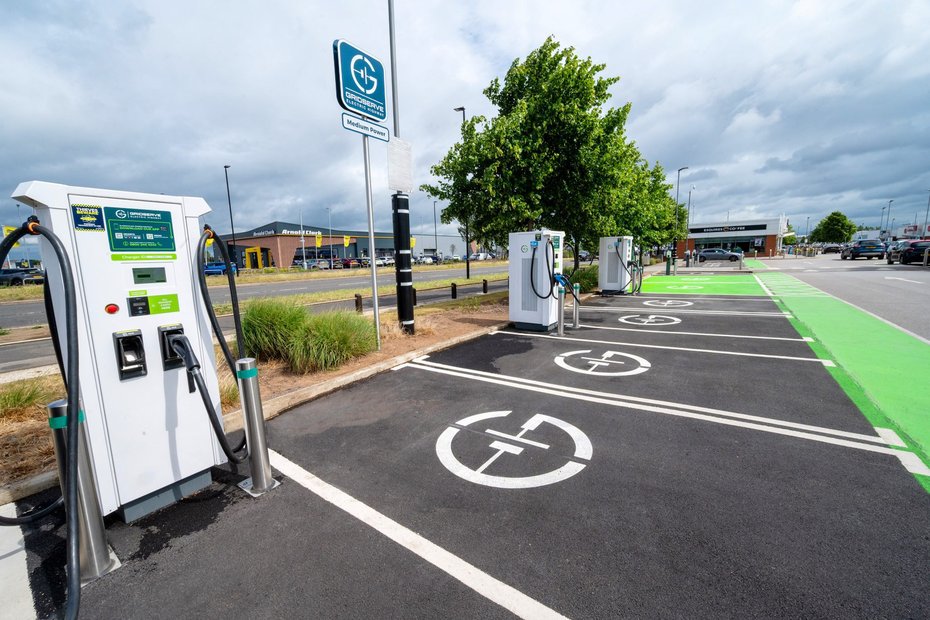
Public EV charging has a reputation problem — and in many cases, it's earned. Prices vary wildly depending on the network, the charger type, and where you are. Here's an honest breakdown of what you'll actually pay, and why it matters for your decision to switch to electric.
How much does public EV charging cost in the UK in 2025?
There's no single answer — it depends entirely on what type of charger you use and which network operates it. Here's the real picture:
| Charger type | Speed | Typical cost | Cost per mile* |
|---|---|---|---|
| Rapid (50kW) Motorway services, forecourts | 100 miles in ~35 min | 65–79p/kWh | ~19–23p |
| Ultra-rapid (100–350kW) Motorway hubs | 100 miles in ~15 min | 79–85p/kWh | ~23–24p |
| Fast (7–22kW) Car parks, supermarkets | 100 miles in ~5 hrs | 30–55p/kWh | ~9–16p |
| Home charger (7.4kW) Standard overnight rate | 100 miles in ~4 hrs | ~24p/kWh | ~7p |
| Home charger (smart tariff) Octopus Go overnight | 100 miles in ~4 hrs | ~7p/kWh | ~2p |
*Based on average EV efficiency of 3.5 miles/kWh
Rapid charging at 79p/kWh costs more per mile than petrol.
Home charging on a smart tariff costs 2p per mile.
Why is public charging so expensive?
Several genuine factors drive the cost — this isn't simply networks being greedy:
- Commercial electricity rates: businesses pay significantly more per kWh than households
- Infrastructure cost: a rapid charger installation costs £30,000–£80,000, and grid connection fees on motorways run higher still
- Land and rates: motorway service areas charge premium rates for the footprint
- Utilisation: chargers that sit idle for hours still carry fixed costs — those costs get spread across fewer sessions
The economics of public charging are genuinely hard, which is why prices have risen significantly in the last two years and are unlikely to fall dramatically.
Should public charging costs put me off an EV?
Not if you can charge at home — and this is the point most reviews miss entirely.
The numbers make the case clearly. EV economics only work if home charging is your primary method. Public charging should be for long journeys and the occasional emergency — not daily use.
Free public charging — is it still a thing?
Some chargers remain free — certain supermarkets (Lidl, some Tesco), some local authority car parks, and workplace chargers. But the trend is firmly toward paid charging as networks look to reach commercial viability. Free public charging is becoming rarer and shouldn't be factored into your financial planning.
💡 Practical tip for long journeys: use apps like Zap-Map or A Better Route Planner to find chargers on your route before you leave. Filter by working chargers and check recent reviews — reliability varies significantly by network and location.
Public charging is expensive — home charging is not
Rapid public charging costs 65–85p/kWh — comparable to or more expensive than petrol per mile. Home charging on a smart tariff costs 7p/kWh — around 2p per mile. The entire financial case for switching to electric depends on making home charging your default. If you can install a home charger, the saving over petrol is transformative. If you can't, factor public charging costs into your decision carefully.
Charge at home for as little as 2p per mile.
A home EV charger from £899 including installation. Fixed price, no site visit needed, OZEV grant applied automatically where eligible.
See your price